
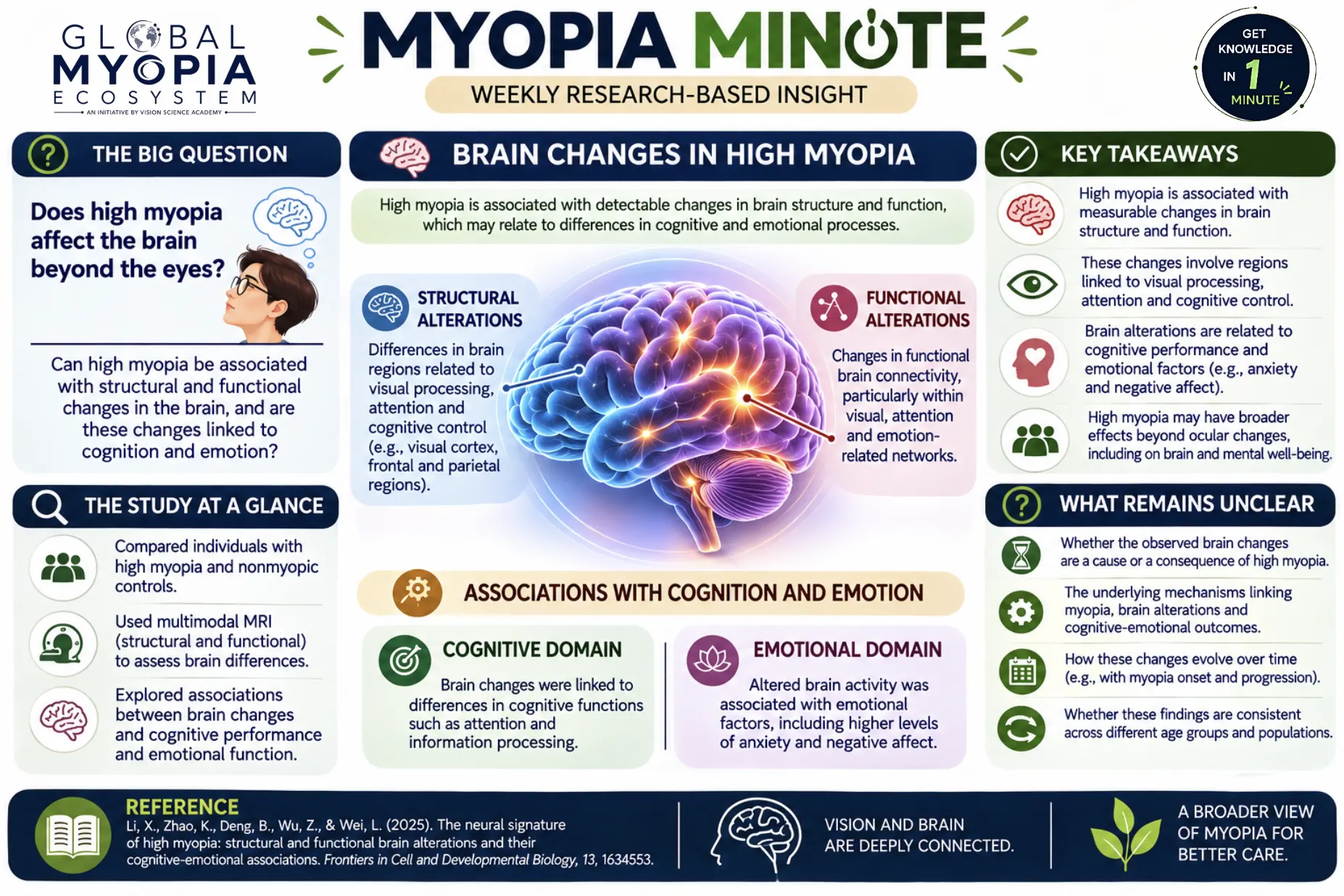
The Eye–Brain Axis in High Myopia
Does high myopia affect the brain beyond the eyes? Neuroimaging reveals functional and structural reorganization along the visual pathway to cortical networks.
Does high myopia affect the brain beyond the eyes? Neuroimaging reveals functional and structural reorganization along the visual pathway to cortical networks.
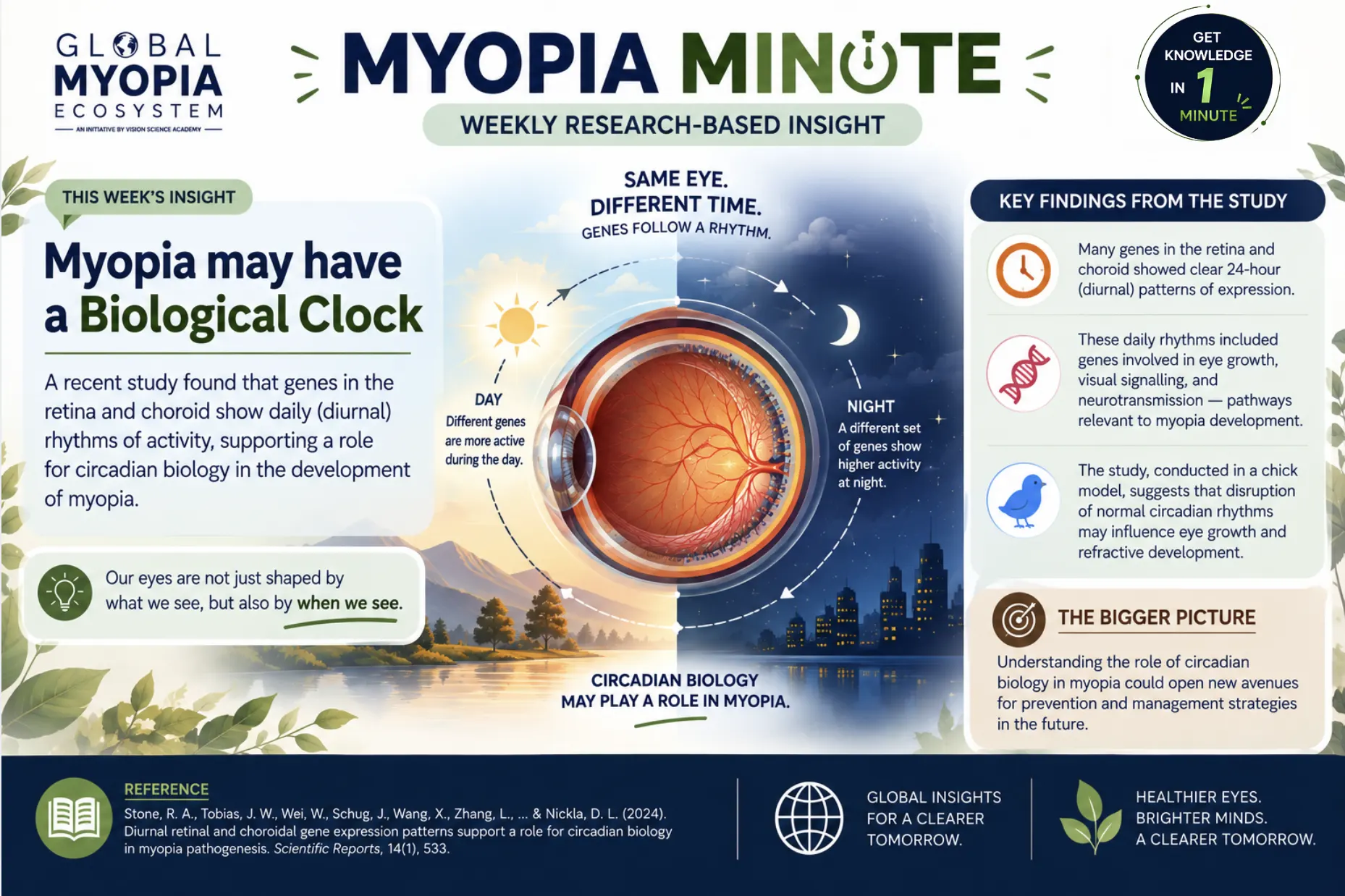
Myopia may have an internal biological clock. Circadian disruption in the retina may influence dopamine release and faster ocular growth.
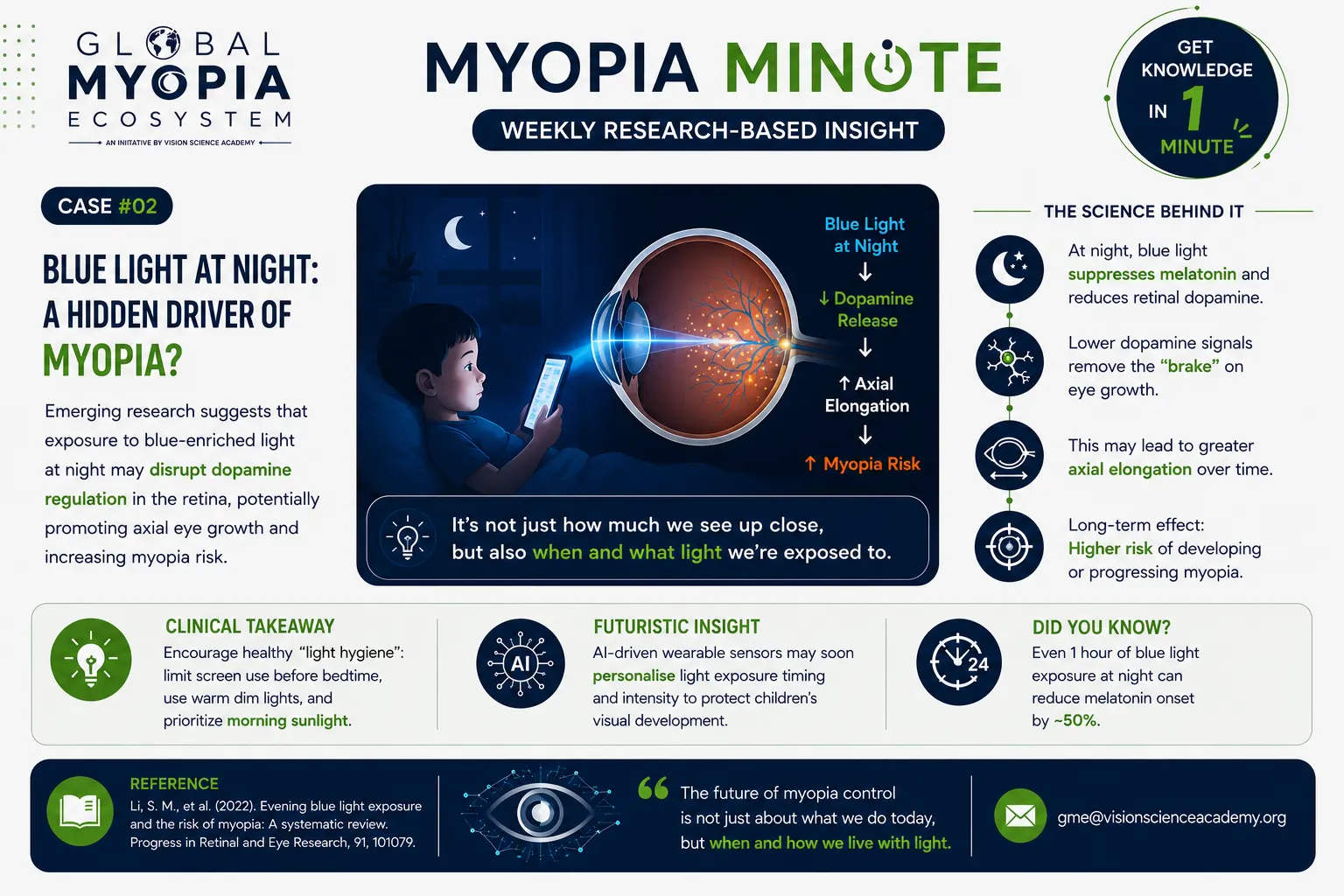
Exposure to blue-enriched light at night suppresses melatonin and retinal dopamine, removing the cellular brake on axial elongation.
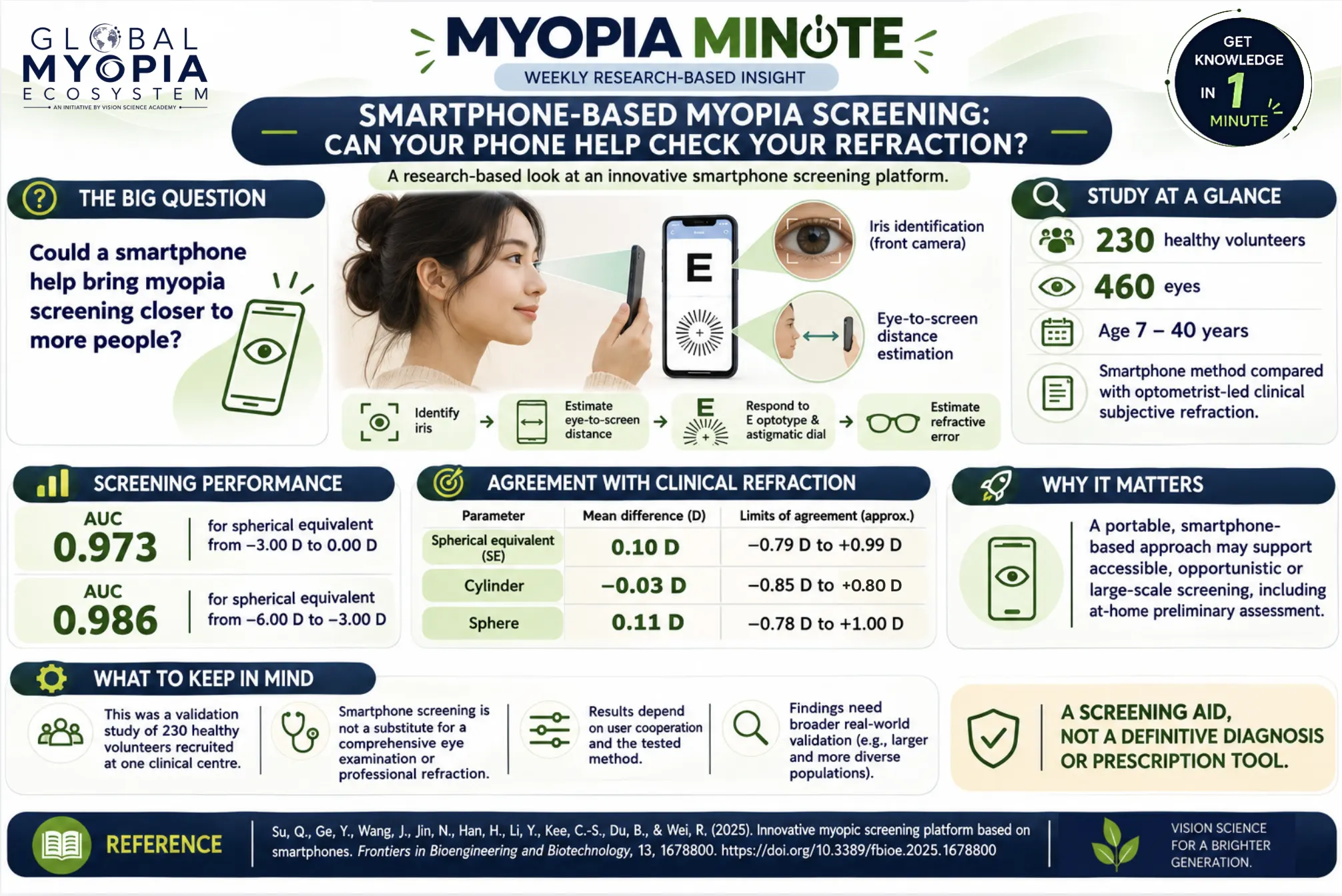
Could smartphone cameras help bring objective myopia and refraction screening to underserved populations, schools, and homes?
.webp)
How artificial intelligence models support risk prediction, early detection, fundus/OCT tracking, and personalized clinical management.
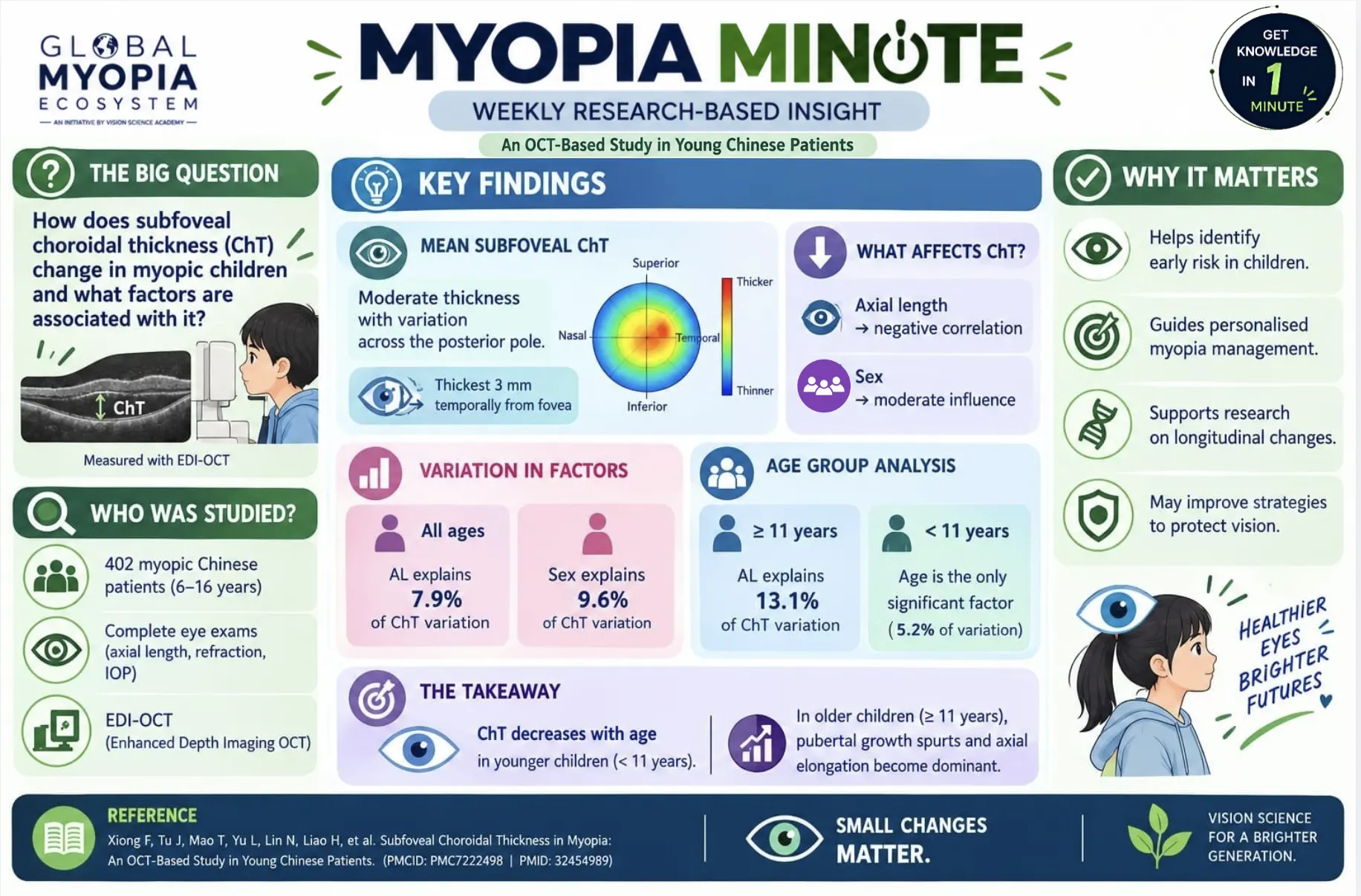
OCT-based analysis showing how subfoveal choroidal thinning correlates with age, axial elongation, and high myopia risk in pediatric eyes.
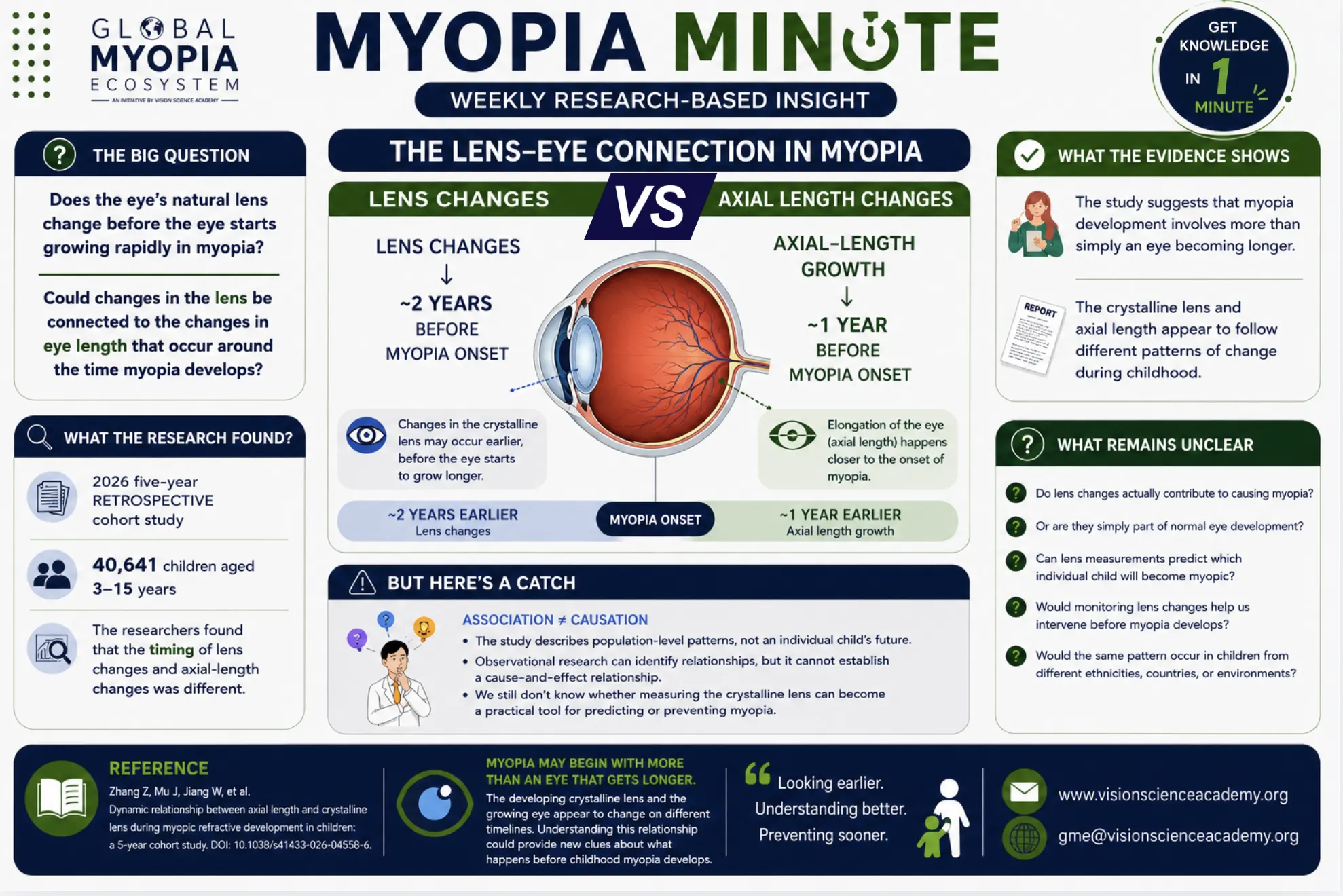
Does the eye's natural crystalline lens undergo compensatory thinning and power loss before the onset of rapid axial elongation in young patients?
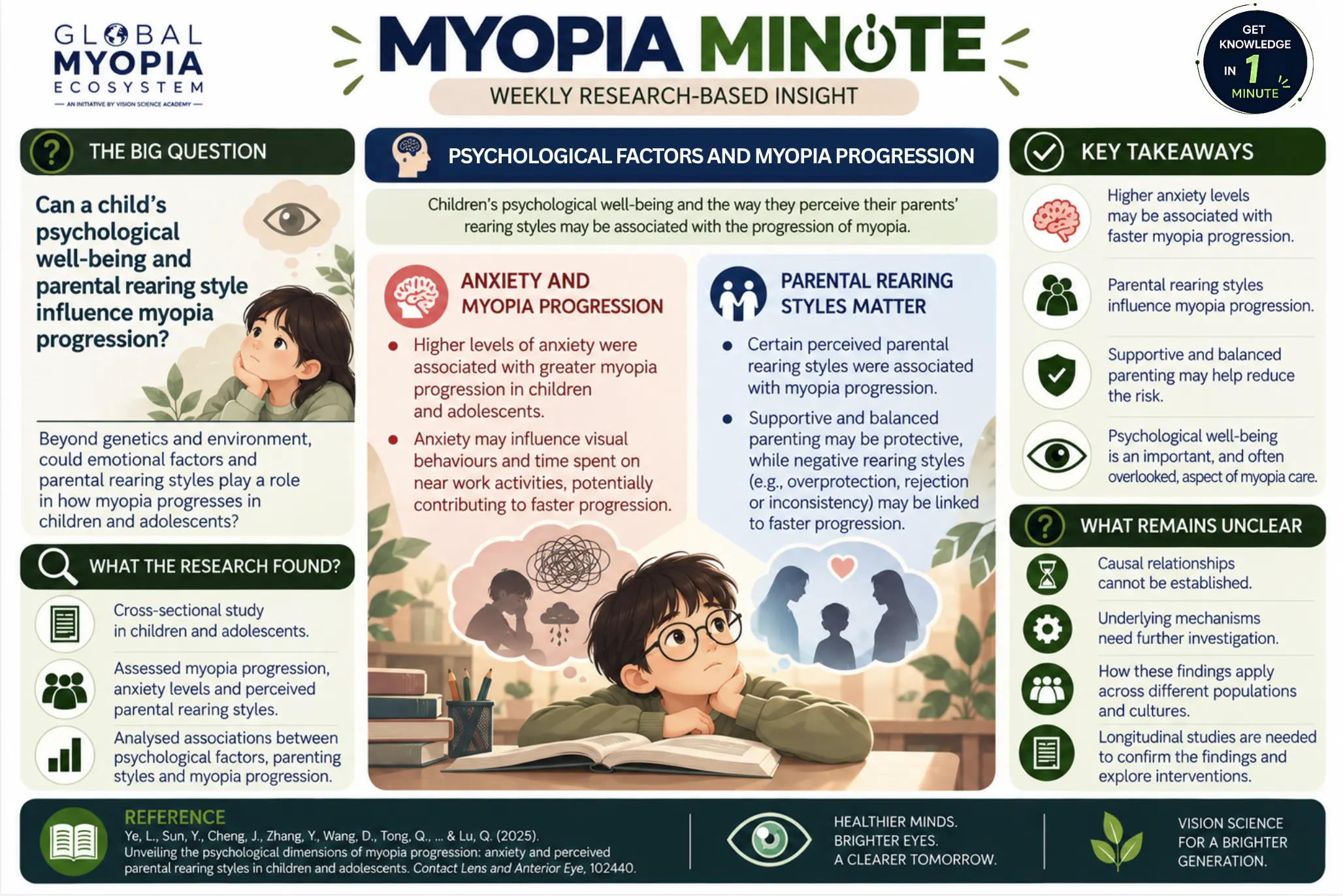
Children's anxiety levels and perceived parental rearing styles show measurable associations with myopia progression and visual work behaviours.
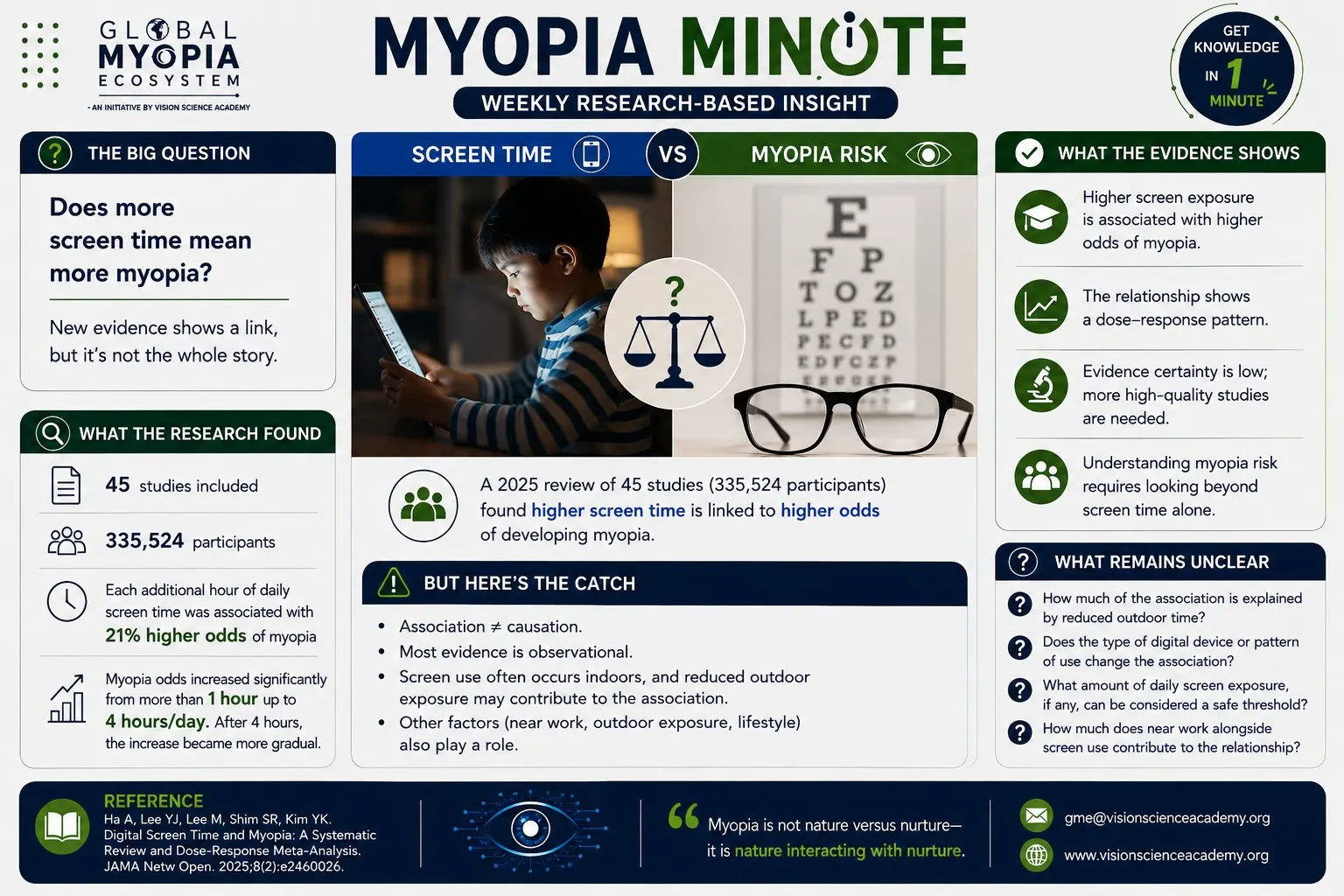
A 45-study systematic review of 335,000+ participants analyzing each additional daily screen hour and the impact of reduced outdoor exposure.
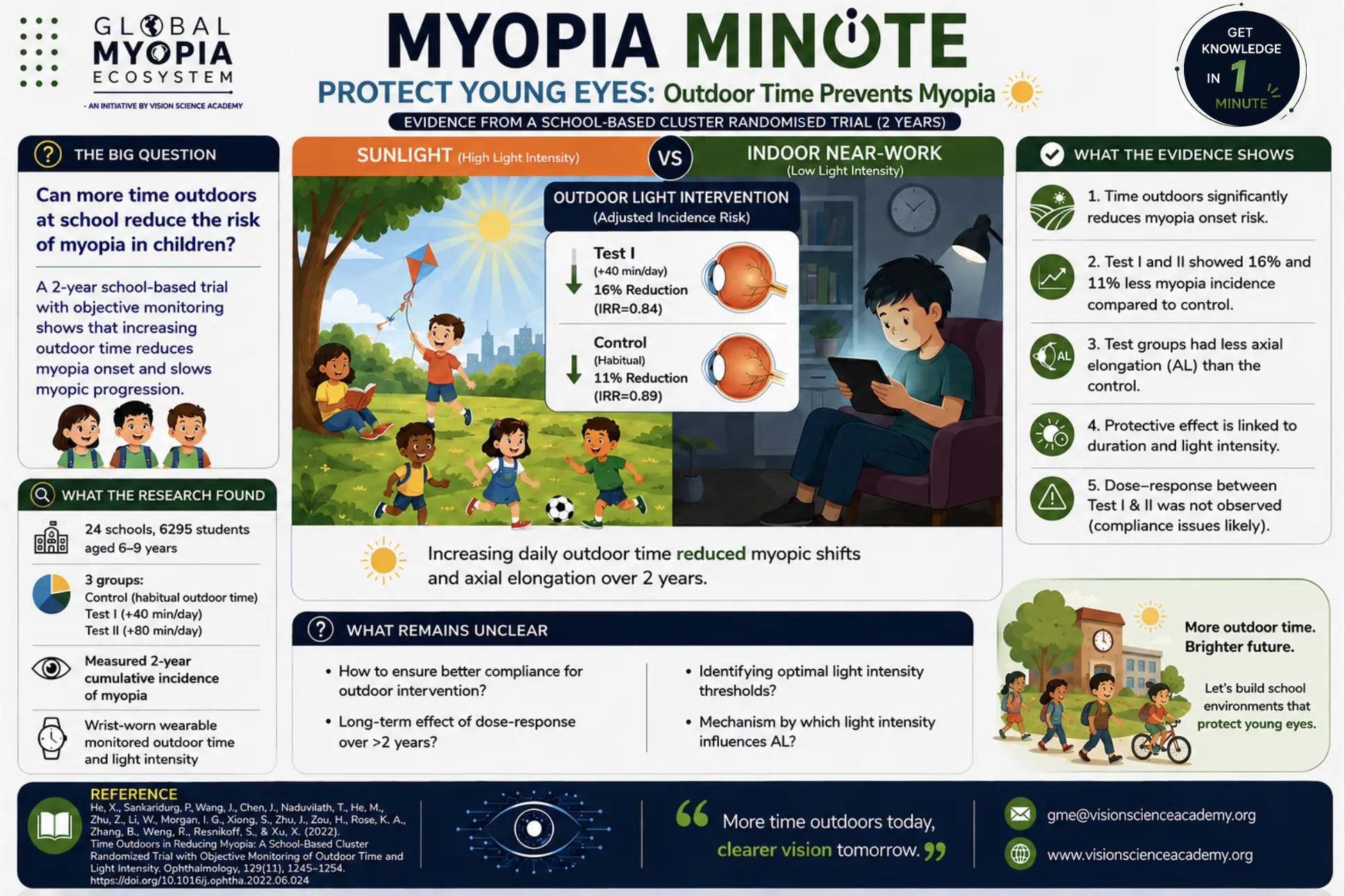
Two-year school-based trial with wearable light-sensor monitoring proving structured daily outdoor time significantly slows axial growth.
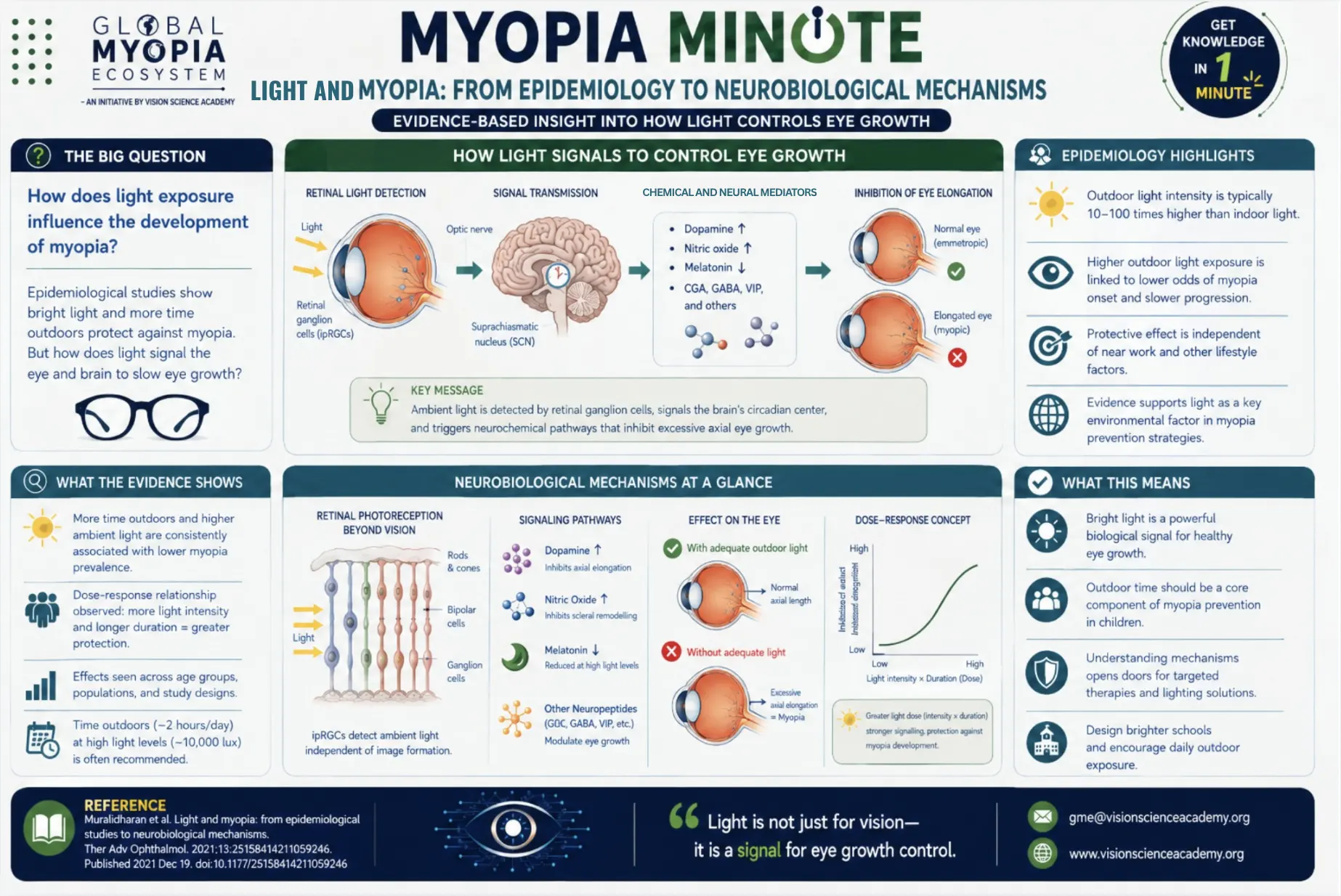
Epidemiological studies and biological pathways show bright light intensity stimulates retinal dopamine release, serving as a brake on eye elongation.
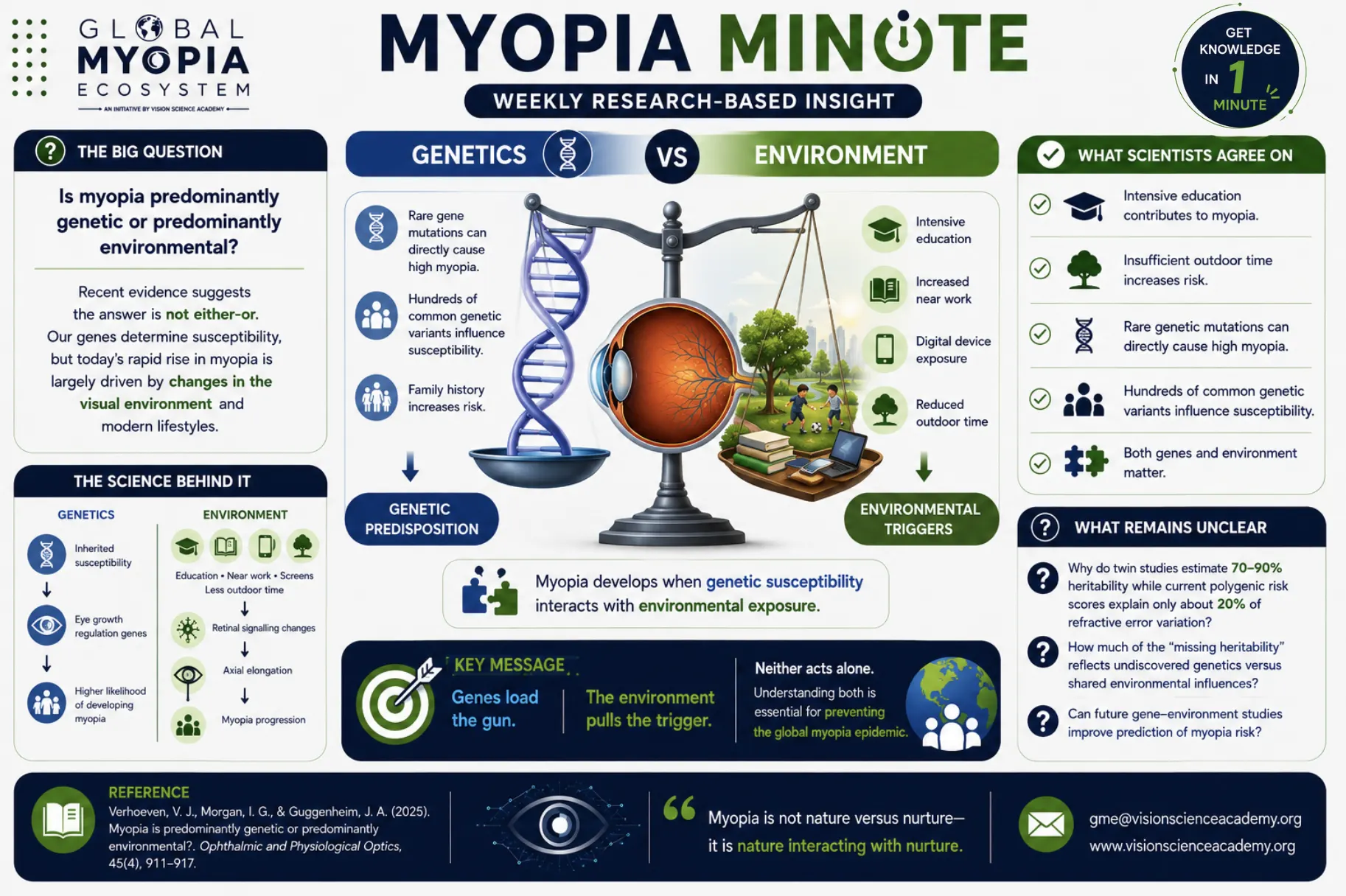
Is myopia genetic or environmental? The synthesis of polygenic risk scores and visual triggers: rare mutations determine risk, but lifestyle drives the surge.